

_FADED_(02).png)
_Cropped.png)
_LEFT.png)
.png)
In Photographs: Highlights 'From Evidence To Action' Conference Aiming To Break The Cycle Of Violence

Updated: Jun 11
THE SPINE BUILDING, PADDINGTON VILLAGE, CITY OF LIVERPOOL, LIVERPOOL CITY REGION.
![The Liverpudlian - Perfect for Locals [Badge]](https://static.wixstatic.com/media/2dbe25_029ef1293062443ea8e27e8ee839cf9b~mv2.png/v1/fill/w_320,h_149,al_c,q_85,usm_0.66_1.00_0.01,enc_auto/2dbe25_029ef1293062443ea8e27e8ee839cf9b~mv2.png)
![The Liverpudlian - Liverpool City Centre [Badge]](https://static.wixstatic.com/media/2dbe25_5aeee25c8381435baec587b02d96eb2c~mv2.png/v1/fill/w_320,h_149,al_c,q_85,usm_0.66_1.00_0.01,enc_auto/2dbe25_5aeee25c8381435baec587b02d96eb2c~mv2.png)
Merseyside Partners Collaborate, Bringing ‘From Evidence to Action: Breaking the Cycle of Violence across Merseyside’ To A Major Conference At The Spine In Liverpool City Centre's The Knowledge Quarter

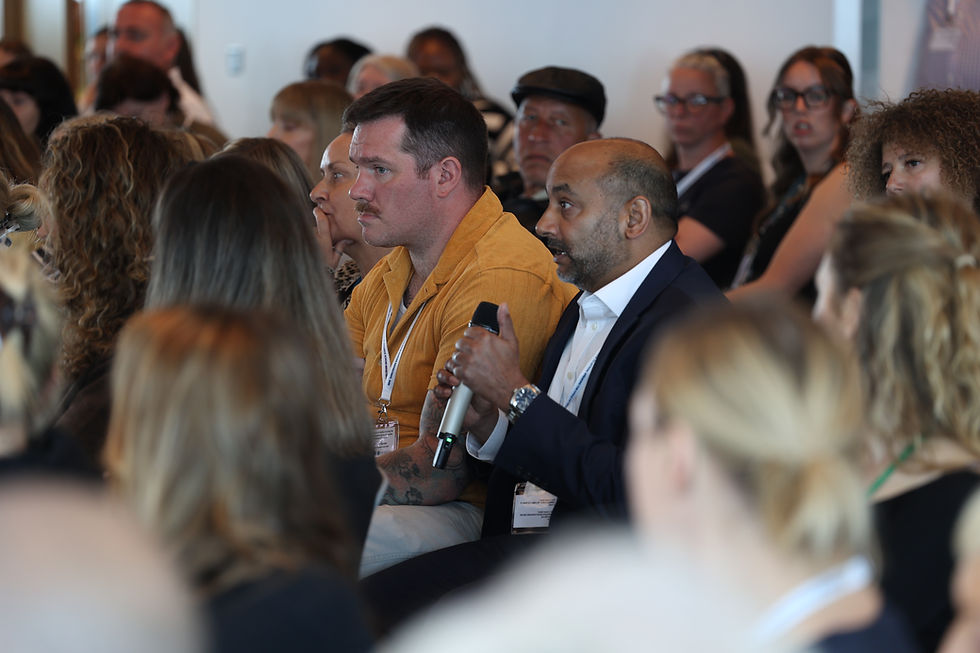
COMMISSIONER SPURRELL today, alongside Professors from LJMU, welcomed more than 200 professionals from across the Merseyside Region for a day of presentations, networking sessions, plenaries, and preparation for the future of breaking the cycle of violence in Merseyside.
The goal of the conference is to consolidate and to drive forward the next phase in tackling serious violence, turning years of evidence and insight into coordinated action to create safer communities.
The ‘From Evidence to Action: Breaking the Cycle of Violence across Merseyside’ conference, hosted by the Merseyside Violence Reduction Partnership (MVRP) and Liverpool John Moores University’s Public Health Institute, showcased how prevention can be delivered at scale across the Region.
Taking place at The Spine in Paddington Village, the event united representatives from policing, health, education, local government, youth services and the voluntary sector – all focused on reducing harm and preventing violence before it happens. They were be joined by families whose lives have been shattered by gun crime, including Sam Rimmer’s mum Joanne, Ashley Dale’s mum Julie and Olivia Pratt-Korbel’s mum Cheryl.
The conference also saw the launch of Merseyside’s new Violence Prevention Strategy, a ten-year blueprint for how organisations across the Region will work together to prevent and reduce violence.
(Credit: Supplied/Image was provided to The Liverpudlian with permission to share, courtesy of the Publicist on behalf of their client. We make no claim to this content).
At its heart is a clear message: violence is preventable, but only through sustained, collective action.
The strategy sets out a public health approach, focusing on early intervention, support across the life course, and tackling the root causes of violence, including trauma, inequality and lack of opportunity. It also reinforces that no single organisation can solve the issue alone, placing partnership working at the centre of delivery.
Research commissioned by the MVRP and conducted by LJMU in 2024 revealed that serious violence costs the region more than £200 million a year in Merseyside alone – highlighting the importance of sustained investment in prevention.
The From Evidence to Action event was opened by Merseyside Police and Crime Commissioner Emily Spurrell, who oversees and commissions the work of the MVRP, alongside Professor Zara Quigg, Director of the World Health Organization Collaborating Centre for Violence Prevention at LJMU.
The conference featured a series of expert-led sessions and panel discussions exploring how evidence can be translated into frontline practice across key areas, including a keynote speech from LJMU’s Professor Mark Bellis, who presented new national research examining the cost of failing to take action when a young person has been affected by an adverse childhood experience.
Sessions focused on:
Health as a catalyst for violence prevention
Early intervention and strengthening families
Supporting children and young people, including those affected by trauma and neurodiversity
Breaking the cycle of offending and reoffending
Creating safer places and stronger communities across Merseyside
The programme also highlighted how organisations across the Region are already putting evidence into action, alongside contributions from children and young people and those with lived experience.
Since it was established in six years ago, the MVRP has reached more than 200,000 young people through its targeted interventions.
The day concluded with a focus on how Merseyside can become a trauma-informed and responsive Region, with closing reflections from Professor Matt Ashton, Director of Public Health at Liverpool City Council.
Merseyside Police and Crime Commissioner Emily Spurrell, said: “We already know a huge amount about what causes violence and what works to prevent it. The challenge now is turning that evidence into meaningful, long-term action.”
The Commissioner added: “This conference is about taking that next step – bringing partners together to share learning, strengthen collaboration and embed what works into everyday practice.”
Commissioner Spurrell, said: “By working together, with communities at the heart of everything we do, we can break the cycle of violence and create better outcomes for future generations.”
The PCC, said: “Our new strategy will build on what’s already been delivered and drive this work forward focused on creating a safer future for all – one where prevention, early intervention and partnership working are at the centre of everything we do.”
Professor Zara Quigg added: “Violence is not inevitable, it is a preventable public health issue requiring evidence-based, collaborative action. A public health approach helps us move beyond reaction to address root causes, reduce risk, and strengthen protection.”
Professor Quigg added: “At Liverpool John Moores University, the Public Health Institute plays a central role through research, evaluation, and leadership, informing regional policy and practice. We educate future leaders and bring together communities, policymakers, and academics to co-create solutions, acting not as observers, but as active partners in building safer, healthier communities.”
Attendees also heard about the future plans for the Dear Merseyside campaign, launched as part of EVOLVE focused on tackling serious and organised crime in the communities most affected.
Detective Chief Superintendent Paul Grounds, head of EVOLVE at Merseyside Police, added: “Dear Merseyside began as a campaign to help young people understand the risks of exploitation, gang involvement and serious violence - and to show there is always another path.”
He added: “At its heart is a powerful spoken-word poem by Liverpool poet Joseph Roberts which is essentially a love letter to our region, celebrating pride, resilience and the strength of our communities.”
The Superintendent, said: “It has evolved into a platform for young people to share their experiences and perspectives through poetry and we are proud to showcase the legacy resource as part of today’s event, ensuring that schools, educators and practitioners can continue to use it to encourage meaningful conversations, challenge harmful attitudes and support early intervention and prevention work.”
Superintendent Grounds added: “We hope the Dear Merseyside resource, which will launch in schools in September, will play an important role in helping to reduce the cycle of violence across Merseyside by encouraging understanding, empathy and positive choices among future generations.”
He added: “We are also incredibly grateful for the support shown by the families of Sam Rimmer, Ashley Dale, Olivia Pratt-Korbel and Elle Edwards, who have contributed to the resource and whose advocacy and commitment to creating safer communities has helped reinforce the importance of this project.”
Merseyside’s Violence Prevention Strategy underlines both the human and economic impact of violence, alongside the significant opportunity to reduce harm through prevention and early intervention.
It calls on organisations across all sectors to work together to strengthen support for individuals, families and communities, ensuring that prevention is visible, consistent and sustained over time.
This year’s conference builds on the success of last year’s inaugural event, the ‘Driving Change: The Impact of Prevention’ event which showcased the work of the MVRP, moving the conversation forward from understanding the impact of prevention to delivering real, system-wide change.


Comments